
How Mice Get in Your House: 7 Common Entry Points Explained
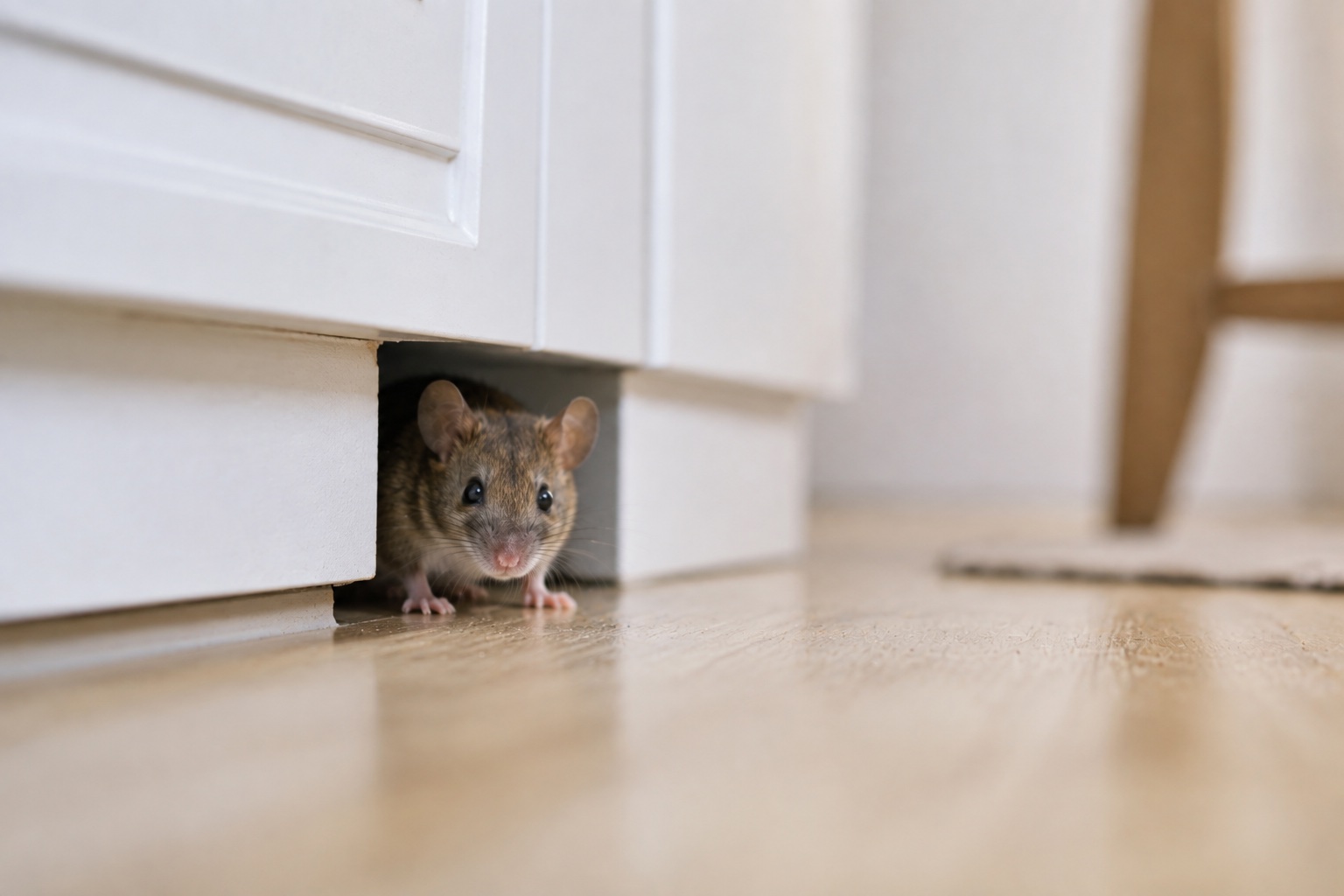
Why Do Mice Come Inside Your Home, and When Should You Call a Mouse Control Professional?
Finding a mouse indoors usually raises two questions: where did it come from, and are there more?
Understanding how mice get in your house is one of the most important steps toward preventing a small mouse problem from becoming a larger infestation. At Tactical Pest and Termite Solutions, we know that eliminating the mice you see is only part of the solution. Homeowners also need to identify the conditions and openings that allowed them inside.
Mice are resourceful, excellent climbers, and capable of squeezing through surprisingly small spaces. Food, water, shelter, and warmth can all encourage them to investigate a property. Knowing the most likely mouse entry points can help you find vulnerabilities before mice settle into walls, attics, kitchens, garages, and crawl spaces.
How Small of an Opening Can a Mouse Enter?
One reason homeowners have difficulty figuring out how mice get in your house is the size of the opening involved.
According to the CDC, mice can fit through an opening only about 1/4 inch, or 6 millimeters, wide—roughly the width of a pencil. That means a gap that looks insignificant to you may be a perfectly usable entrance for a mouse.
Inspecting your home for gaps is therefore an important part of mouse prevention. Pay special attention to areas where different building materials meet or where utilities pass through exterior walls.
1. Gaps Around Doors and Garage Doors
When investigating how mice get in your house, exterior doors are a good place to begin.
Worn weather stripping, gaps beneath doors, poorly fitting garage doors, and damaged thresholds can provide easy access. Garages can be particularly attractive because they often contain storage boxes, pet food, birdseed, grass seed, or other materials that offer food or nesting opportunities.
Check exterior doors from both sides and replace damaged seals or weather stripping when necessary.
2. Openings Around Pipes and Utility Lines
Plumbing, electrical wiring, cable lines, HVAC components, and other utilities have to enter your home somewhere. Small gaps are sometimes left around these penetrations.
These overlooked openings are another common explanation for how mice get in your house. Inspect around pipes beneath sinks, utility lines entering exterior walls, dryer vents, water heaters, furnaces, and similar areas.
The CDC specifically recommends checking around electrical, water, gas, sewer, and other utility lines when rodent-proofing a building.
3. Foundation and Crawl Space Gaps
Cracks and openings near the foundation can give mice access to crawl spaces and other protected areas beneath a house.
Once inside a crawl space, rodents may find additional routes into wall cavities or living areas. Homes with foundation vents should also be checked for damaged screens or openings around the vent frame.
For homeowners throughout Mint Hill, NC, Matthews, Marvin, Waxhaw, and surrounding communities, periodic inspections can help identify these vulnerabilities before rodents become established.
4. Rooflines, Eaves, and Attic Vents
Not every answer to how mice get in your house is found near ground level.
Mice can climb and may reach openings around rooflines, soffits, eaves, gables, and attic vents. Damaged screening or small construction gaps can create pathways into an attic, where insulation and secluded spaces offer excellent nesting material and shelter.
If you hear scratching or movement overhead, especially at night, an attic inspection may be warranted.
5. Cracks Around Windows and Exterior Walls
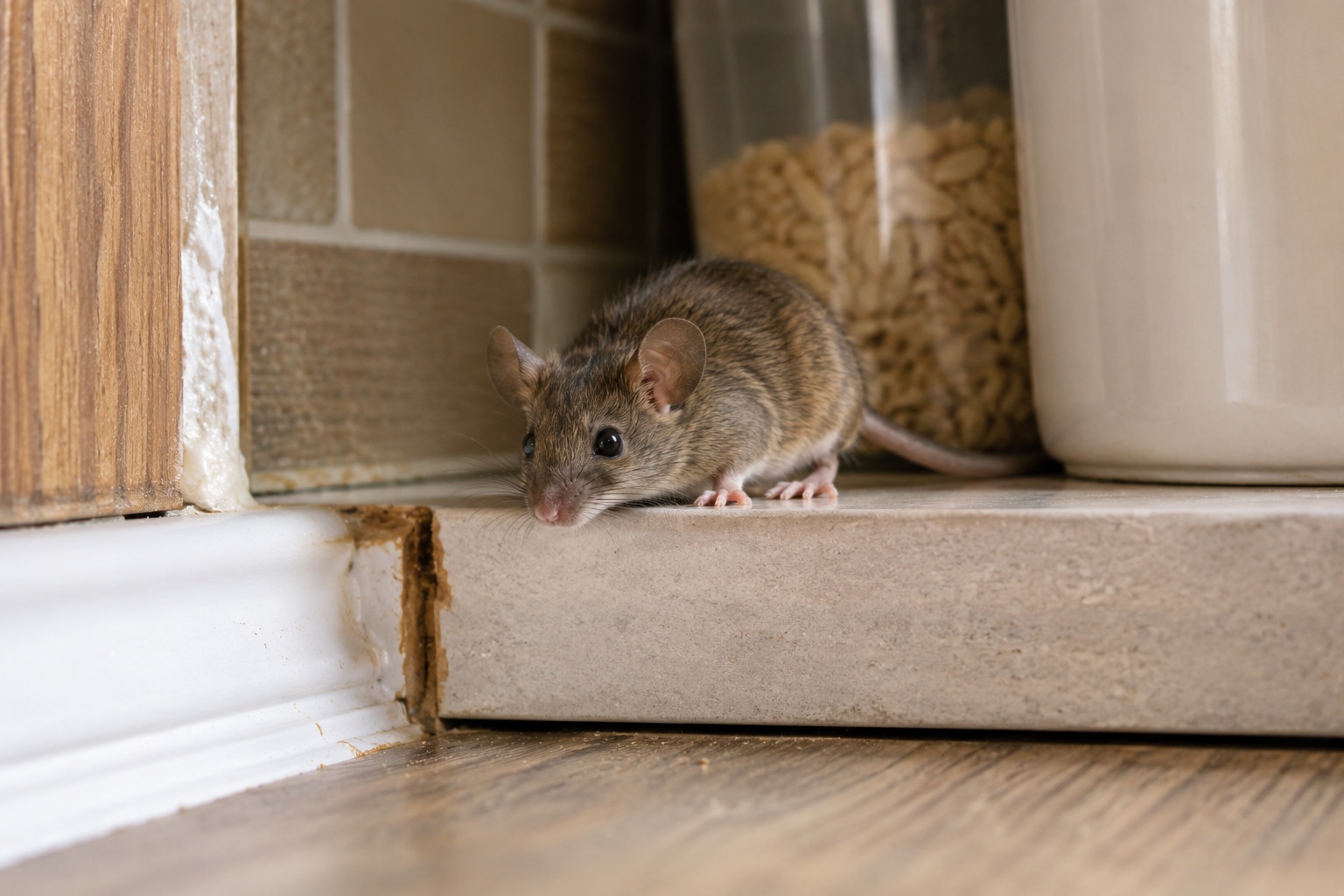
Windows, siding transitions, trim, and exterior wall penetrations can develop gaps as a home ages.
Look closely around window frames, damaged siding, vents, and areas where additions or different building materials meet. Finding these openings helps explain how mice get in your house even when doors and obvious entryways appear secure.
Simply finding a mouse indoors does not always reveal the actual entrance. A thorough exterior inspection is often necessary.
6. Food Sources That Encourage Mouse Activity
Entry points explain how mice enter, but food and shelter can explain why they stay.
Pet food, birdseed, pantry goods, crumbs, garbage, and improperly stored animal feed can attract rodents. The CDC recommends keeping food and garbage in tightly sealed containers and removing accessible food sources that could encourage rodent activity.
Reducing these attractants is an important part of preventing how mice get in your house from turning into an ongoing infestation.
7. Clutter and Undisturbed Nesting Areas
Mice prefer places where they can remain hidden. Cardboard boxes, paper, stored fabrics, cluttered garages, attics, crawl spaces, and storage rooms can provide nesting material and protection.
Decluttering these areas won’t necessarily eliminate an existing infestation, but it makes your property less hospitable and makes signs of mice easier to notice.
Watch for droppings, gnaw marks, shredded nesting materials, or nighttime scratching. The CDC notes that droppings and gnaw marks are often among the first indications of rodent activity.
What Should You Do If You Find Mice?
Once you understand how mice get in your house, the next step is addressing both the rodents and the conditions that allowed them inside.
Sealing accessible gaps, limiting food sources, reducing nesting areas, and checking overlooked entry points can help prevent future activity. However, an established infestation may involve hidden pathways or nesting areas that aren’t obvious to the homeowner.
That is where professional mouse pest control can help. Tactical Pest and Termite Solutions evaluates each property individually because mouse problems can vary significantly depending on the structure and conditions around the building. Mouse control is also included within the company’s General Pest program.
Frequently Asked Questions
-
Mice get into houses through very small gaps around doors, foundations, utility lines, vents, roofs, and exterior walls. They can exploit openings only about 1/4 inch wide, which makes many entry points difficult for homeowners to notice.
-
Mice usually enter a house because they can find food, water, shelter, or suitable nesting areas. Accessible pet food, pantry goods, garbage, clutter, and protected spaces can make a home particularly attractive once mice discover an entry point.
-
Start around doors, foundations, utility penetrations, vents, crawl spaces, attics, eaves, and rooflines. Also inspect areas around plumbing, electrical lines, HVAC equipment, windows, siding, and garage doors for small gaps.
-
Seeing one mouse does not prove that multiple mice are present, but it should not be ignored. Check for additional evidence such as droppings, gnaw marks, scratching noises, nesting material, or repeated sightings.
-
Sealing holes is essential for preventing additional mice from entering, but it may not eliminate mice already inside. Effective mouse control may require identifying current activity, addressing food and shelter, closing entry points, and removing rodents that have already entered the structure.
Protect Your Home from Mice
Understanding how mice get in your house gives you a better chance of stopping them before they become established. Inspect doors, utility penetrations, foundations, crawl spaces, rooflines, vents, and other small openings while also reducing accessible food and nesting areas.
If you are finding droppings, hearing scratching noises, spotting mice, or simply aren’t sure where they are entering, contact Tactical Pest and Termite Solutions. Our professional pest control services can help identify the problem and determine an appropriate approach for protecting your home.