
Carpenter Ants vs Termites: 7 Key Differences to Know

Know What’s Damaging Your Home
Seeing large ants, winged insects, or unexplained wood damage around your home can immediately raise concerns about termites. However, carpenter ants can produce some surprisingly similar warning signs. Understanding carpenter ants vs termites can help homeowners recognize what they may be dealing with and determine when a professional inspection is warranted. Tactical Pest and Termite Solutions helps homeowners throughout Mint Hill and surrounding North Carolina communities identify and control wood-damaging pests before the problem becomes more serious.
Carpenter Ants vs Termites: How Can You Tell Them Apart?
Carpenter Ants vs Termites: How Can You Tell Them Apart?
Carpenter ants and termites can both be found around wooden portions of a home, and both can produce winged reproductive insects. The important difference is what they are doing to the wood. Carpenter ants excavate wood to create nesting galleries, while termites consume cellulose found in wood and other materials.
Here are seven clues that can help distinguish carpenter ants vs termites.
1. Look Closely at the Body Shape
One of the easiest differences to spot is the insect’s body.
Carpenter ants have a clearly defined, narrow waist between the thorax and abdomen. Termites have a broader body without the noticeably pinched waist associated with ants.
Carpenter ants are also among the largest ants found in North Carolina. According to NC State Extension, carpenter ant workers can vary considerably in size within the same colony.
If you can safely observe the insect without disturbing the area, body shape may provide your first identification clue.
2. Compare Their Antennae
Antennae provide another helpful way to compare carpenter ants vs termites.
Carpenter ants have elbowed antennae that bend noticeably. Termite antennae are straighter and have a bead-like appearance.
This distinction can be difficult to see from across a room, so homeowners shouldn’t rely on antennae alone. If you find dead insects or discarded wings near a window, door, or light fixture, however, a closer inspection may reveal useful clues.
3. Examine Wing Shape on Swarmers
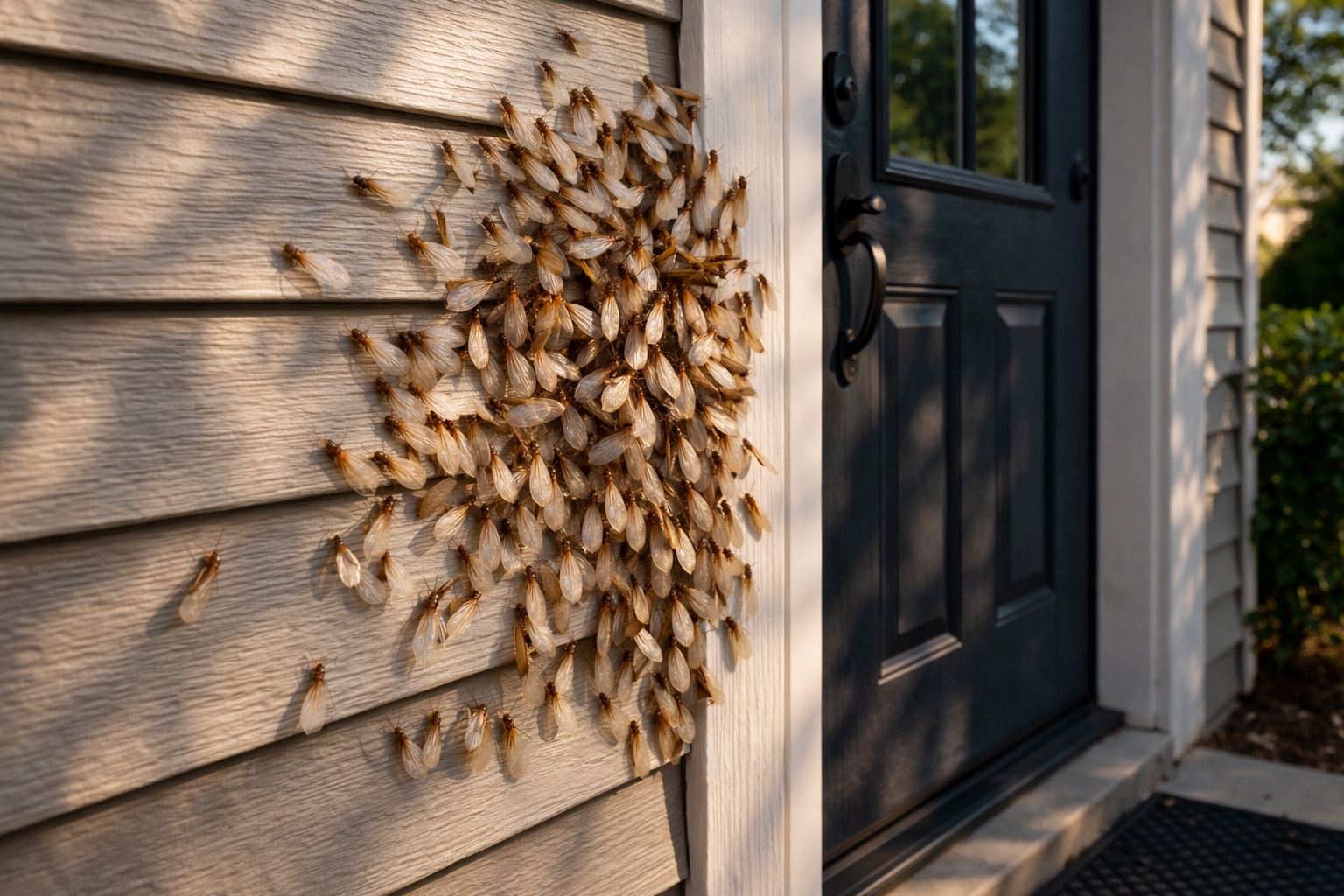
Both carpenter ants and termites produce winged reproductive members that leave established colonies to start new ones.
Winged carpenter ants have two pairs of wings, but their front wings are noticeably larger than their rear wings. Termite swarmers have four wings that are approximately equal in length.
Finding numerous winged insects indoors can indicate that a colony is located inside or close to the structure. Rather than simply vacuuming them up and forgetting about them, consider the sighting a reason to investigate further.
4. Understand What They’re Doing to the Wood
Perhaps the most important distinction between carpenter ants vs termites is how they interact with wood.
Carpenter ants do not eat wood. Instead, they remove wood while creating galleries where the colony can nest. NC State Extension explains that carpenter ants may push this excavated material from the nesting area, sometimes leaving small piles of sawdust-like debris.
Termites, on the other hand, consume cellulose. Over time, an established termite infestation can damage wooden structural components while remaining largely hidden from view.
5. Look for Frass or Termite Mud Tubes
Evidence around the damaged area can provide additional clues when comparing carpenter ants vs termites.
Carpenter ant activity may leave coarse sawdust-like material, often called frass, near cracks, wall voids, window frames, or other nesting locations.
Subterranean termites may build narrow mud tubes along foundations, crawl-space supports, masonry, or other surfaces. These protected passageways help termites travel between the soil and a food source.
Neither sign should be ignored. Visible debris or mud tubes may indicate activity extending beyond what you can see.
6. Pay Attention to Moisture Problems
Moisture is another important part of the carpenter ants vs termites discussion.
Carpenter ants frequently establish nests in wood affected by excessive moisture or decay. Areas around leaking plumbing, windows, doors, roofs, gutters, crawl spaces, and other damp locations deserve particular attention. NC State Extension also recommends inspecting moisture-damaged areas after storms because wet or decaying wood can provide favorable nesting locations.
Moisture can also contribute to conditions favorable for termite activity. Fixing leaks, improving drainage, and correcting damaged wood can therefore be important parts of protecting your home.
7. Don’t Assume Visible Ants Tell the Whole Story
Seeing a few carpenter ants doesn’t necessarily reveal where the colony is located.
Workers can travel considerable distances while searching for food, and colonies may establish nests in wall voids, damaged wood, trees, stumps, firewood, or other protected areas. This is one reason spraying the ants you happen to see may not solve the underlying problem.
Tactical Pest and Termite Solutions can inspect the property to help determine what pest is present, where activity may be originating, and what treatment approach is appropriate.

Are Carpenter Ants as Destructive as Termites?
Generally, termites have greater potential for extensive structural damage because they actually consume wood. Carpenter ants remove wood to create nesting space.
That does not mean carpenter ant activity should be ignored. NC State Extension notes that an unnoticed carpenter ant problem can eventually cause significant wood damage.
When considering carpenter ants vs termites, the safest approach is not to guess based solely on the amount of visible damage. Both problems deserve investigation.
What Should You Do If You Find Carpenter Ants or Termites?
Start by documenting what you find. Take photographs of insects, wings, mud tubes, wood damage, or sawdust-like debris before cleaning the area.
Next, look for obvious moisture problems such as plumbing leaks, damaged gutters, roof leaks, or water collecting near the foundation. Avoid tearing apart walls or disturbing suspected termite tubes simply to identify the pest.
If activity continues or you discover signs of wood damage, a professional pest inspection can help determine whether you’re dealing with carpenter ants, termites, or another wood-damaging insect.
Frequently Asked Questions
-
Look at the waist, antennae, and wings. Carpenter ants have narrow waists and elbowed antennae, while termites have broader bodies and straighter antennae. Winged carpenter ants also have larger front wings, while termite swarmers have four wings of roughly equal length.
Protect Your Home from Wood-Damaging Pests
Knowing the differences between carpenter ants vs termites can help you recognize warning signs, but identifying the source of an infestation can be considerably more difficult.
At Tactical Pest, we provide customized pest and termite solutions for homeowners in Mint Hill, Matthews, Marvin, Waxhaw, and surrounding communities. If you’ve discovered winged insects, unexplained wood damage, mud tubes, or carpenter ant activity around your home, contact Tactical Pest and Termite Solutions for professional help identifying the problem and determining the appropriate next step.